In Burkina Faso, the arrest of a prominent Sunni imam has sent shockwaves through the nation. Mohamad Ishaq Kindo, a widely respected religious leader and president of the country’s Sunni Ulema Association, was taken into custody in Ouagadougou on the afternoon of May 26. The circumstances surrounding his detention remain shrouded in mystery, with authorities yet to provide an official explanation.
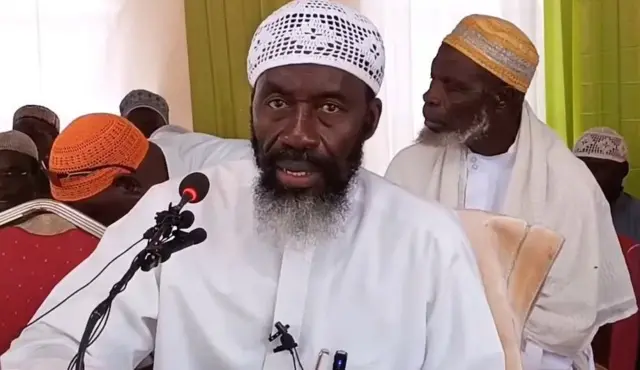
what led to the imam’s controversial detention?
Just two days prior to his arrest, an audio recording of an imam Kindo’s sermon went viral on social media. In the recording, he sharply criticized the newly adopted religious freedoms bill, passed by the government on March 19. The bill seeks to regulate religious practices to curb extremist rhetoric and hate speech online. Critics argue it could restrict fundamental freedoms, though authorities insist it targets only those promoting violence or division.
The Federation of Islamic Associations of Burkina Faso (FAIB), of which Kindo is a leading figure, issued a statement expressing concern over the lack of transparency. The organization confirmed it had formally requested details from relevant authorities regarding Kindo’s detention and called for a fair resolution.
a tense arrest and its aftermath
The imam’s apprehension was not without incident. Eyewitnesses described a heavy-handed operation carried out by masked security personnel—including police and military units—shortly after 2:00 p.m. local time. The timing coincided with heightened security ahead of the Eid al-Adha celebrations. Tensions flared as Kindo’s followers attempted to intervene, resulting in clashes and injuries among worshippers.
News of the arrest ignited public outrage. Within hours, hundreds of Muslims gathered in central Ouagadougou to demand Kindo’s immediate release. Authorities responded by dispersing the crowd using tear gas, further escalating tensions. The FAIB urged calm, calling for patience and restraint from the faithful.
Despite the growing backlash, no official statement has been issued regarding Kindo’s whereabouts or the legal grounds for his detention. This silence has only deepened concerns among his supporters and human rights observers alike.
a new religious law fuels debate
The religious freedoms bill, adopted in March, has become a focal point of national debate. While the government frames it as a necessary tool to combat radicalization and online hate speech, skeptics see it as an overreach that could silence dissenting voices. Mariem Sanogo, Director General of Religious, Customary, and Traditional Affairs, defended the law during a recent interview, emphasizing that it was not entirely new but had been updated to address rising extremism and inflammatory online content.
One of the law’s most contentious provisions prohibits the construction of religious buildings within public institutions, except in hospitals, prisons, and military facilities. Authorities argue this measure prevents preferential treatment of any single faith while preserving public order. However, the law stops short of banning prayer in public spaces, provided it does not infringe on others’ beliefs.
no official word as the nation watches
On the morning following Kindo’s arrest—coinciding with Eid al-Adha—the president of Burkina Faso addressed the nation through social media. He praised security forces battling jihadist insurgencies in the north and center of the country but warned would-be troublemakers that any attempt to disrupt national stability would be met with full legal consequences.
As of now, no official explanation has been given regarding Kindo’s detention. His supporters continue to demand transparency, while observers question whether this incident reflects a broader pattern of repression under the current military administration. Since the 2022 coup led by Captain Ibrahim Traoré, several vocal critics of the regime have disappeared or faced legal action, with authorities attributing such measures to national security imperatives.
The coming days will reveal whether Kindo’s case becomes a symbol of resistance or another footnote in Burkina Faso’s evolving political and religious landscape.