A deadly dawn in the Sahara
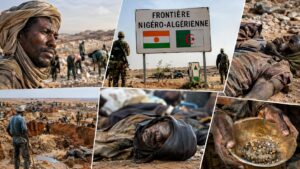
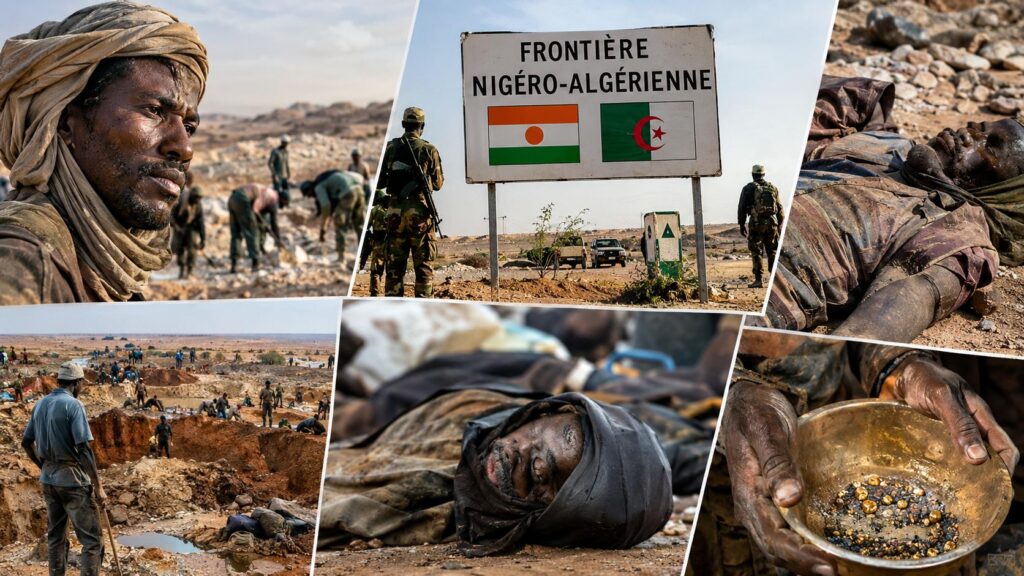
At least 48 civilians lost their lives when an Algerian military helicopter opened fire on an artisanal gold mining site straddling the Niger-Algeria frontier. The victims were unarmed diggers, many of them young men who had traveled from Niger and neighboring countries hoping to strike it rich in the remote desert pits.
The attack, carried out by a Russian-made Mi-171 gunship, has ignited fury and disbelief across Niger, where the military government in Niamey has yet to issue any official response. For many, the silence speaks louder than words.
What happened at the mining camp
Witnesses describe a scene of horror. The helicopter was seen circling low over the makeshift camp before unleashing its firepower on tents, vehicles, and the fragile infrastructure that sustains the informal mining community. Dozens more were wounded, with survivors struggling to evacuate the injured across a vast, roadless expanse of desert to the nearest medical facilities.
Algiers has long justified its cross-border aerial patrols as part of a campaign against terrorism and smuggling networks. But in this instance, the victims were not militants — they were informal laborers, drawn to the goldfields by poverty and the promise of a better life. Their deaths have laid bare the human cost of military operations that treat entire border zones as free-fire areas.
A question of sovereignty — and silence
The strike raises an uncomfortable question: how can a government that has built its entire legitimacy around the defense of national sovereignty allow a foreign army to kill its citizens without a word of protest? In normal circumstances, such an incident would trigger an immediate diplomatic crisis. Instead, General Abdourahamane Tiani’s junta has remained conspicuously quiet.
Regional analysts suggest that the raid may have been carried out with at least the tacit approval of Niger’s military leaders. Isolated diplomatically and desperate for regional allies after severing ties with traditional partners, the Tiani regime appears willing to trade territorial integrity for political survival. Algeria, determined to secure its southern flank at any cost, is exploiting that vacuum to impose its own rules beyond the border.
An army in disarray
The Algerian incursion comes at a moment of profound internal weakness for Niger’s armed forces. The military is still reeling from a failed coup attempt in late August that exposed deep fissures within the command structure. Since then, an unprecedented wave of desertions has swept through the ranks.
Officers and soldiers alike are abandoning their posts, disillusioned by the junta’s political direction, exhausted by the deteriorating security situation, and unwilling to be complicit in abuses or internal score-settling. This hollowing-out of Niger’s security apparatus leaves the field open to neighboring armies and non-state armed groups, as the remaining forces struggle to cover a territory the size of Western Europe.
Anger on the streets
In Niger, grief is turning to rage. Families of the victims and civil society organizations are demanding answers. How can a government that claims to champion national dignity tolerate the massacre of its own civilians by a foreign military without demanding accountability?
By turning a blind eye to Algeria’s actions and failing to hold its own troops together, the Niamey junta is revealing its limits. This border tragedy marks a dark turning point: a weakened nation where the pursuit of gold has become a death sentence and where sovereignty is little more than a slogan.