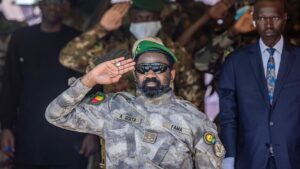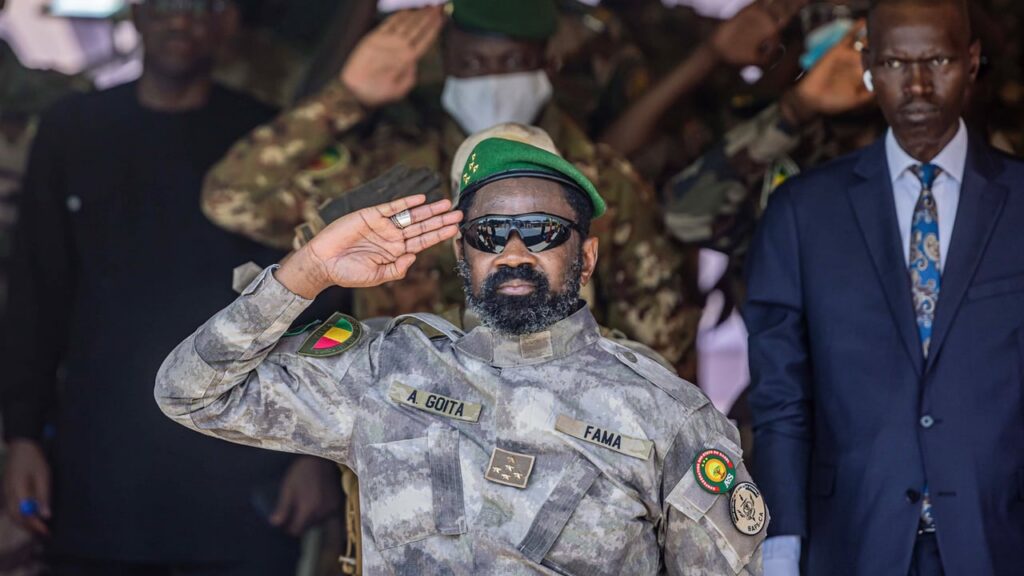

Since taking the helm of Mali, Assimi Goïta has become the unchallenged figure at the center of a nation navigating turbulent waters. His leadership, marked by decisive moves and an unyielding stance, has reshaped Mali’s political landscape in recent years. Yet, beneath the surface of his authority, the country remains gripped by deep-seated challenges that test even the most resilient leadership.
From military leader to head of state: a transition under pressure
General Assimi Goïta rose to prominence as a key military commander before stepping into the role of transitional president. His ascent was swift, propelled by a wave of public frustration with the political elite and the growing influence of armed factions across the region. Today, he stands as the face of Mali’s determination to reclaim stability, even as security threats loom large and state institutions struggle to regain their footing.
The death of Sadio Camara, his defense minister, in late April 2026 underscored the fragility of Mali’s security situation. The funeral in Bamako became not just a moment of national mourning but a stark reminder of the dangers facing the nation. Goïta’s presence at the ceremony sent a clear message: the government will not retreat in the face of adversity.
Navigating a fractured political landscape
The path to stability in Mali has been anything but smooth. Assimi Goïta inherited a country deeply divided by years of political upheaval, including the overthrow of former President Ibrahim Boubacar Keïta in 2020. His transitional government, initially seen as a temporary solution, has evolved into a central pillar of Mali’s political order, defying expectations and consolidating power.
Yet, his leadership has not been without controversy. Critics argue that his rule has sidelined traditional political voices, including that of former interim president Bah N’Daw, whose influence has waned in recent years. Meanwhile, the rise of armed groups, particularly the Group for the Support of Islam and Muslims (JNIM), continues to pose a severe threat to national cohesion and security.
Security challenges: the battle for Mali’s future
The security crisis remains the most pressing challenge for Assimi Goïta and his administration. Armed groups, operating with increasing boldness, have expanded their reach across Mali and neighboring countries. The government’s response has been multifaceted, combining military operations with diplomatic efforts to isolate extremist factions. However, the road to lasting peace is fraught with obstacles, from logistical hurdles to the persistent influence of external actors.
Goïta’s approach to security has been pragmatic, prioritizing action over rhetoric. His government has forged alliances with regional partners and invested in counterterrorism initiatives, yet the threat persists. The loss of key figures, such as Sadio Camara, serves as a grim reminder of the human cost of this crisis.
A nation at a crossroads
Mali today stands at a critical juncture. Under Assimi Goïta, the country has made strides toward reclaiming its sovereignty, but the road ahead is uncertain. The government’s ability to restore security, rebuild trust in state institutions, and unite a divided population will define Mali’s trajectory for years to come. For now, Goïta remains the central figure in this high-stakes endeavor, his leadership both a source of hope and a subject of intense debate.